
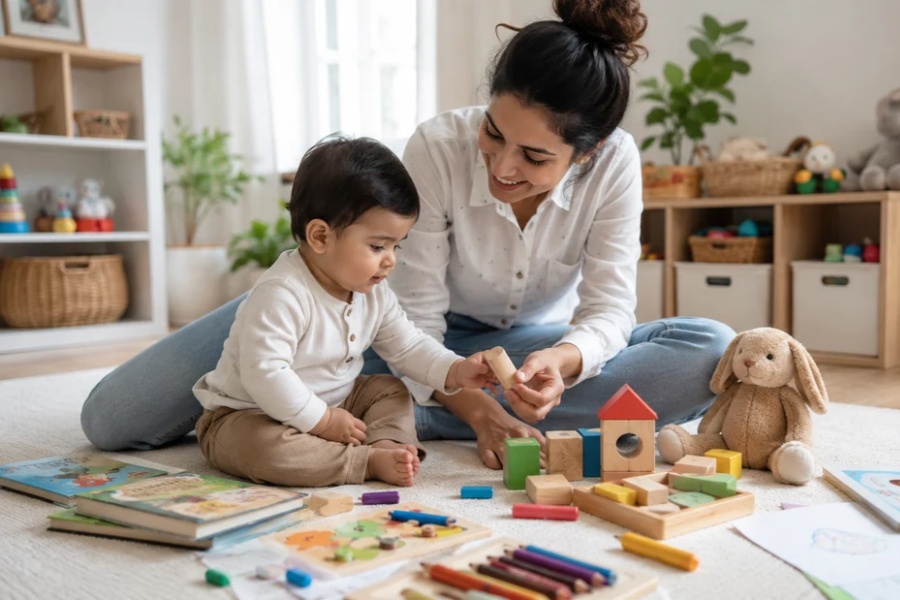
The Art of Playing with Your Child
Playtime is not just fun—it’s a chance to enter your child’s world. But how you play matters. This HSK 5 reading offers four simple skills: show real interest, listen actively, ask open questions, and let your child solve problems. Small changes, big connection.
翻译 Translation
小孩子一般都对游戏很感兴趣,并且渴望父母与自己一起玩儿游戏。不过,陪孩子玩儿也得讲技巧,否则,很难达到理想的效果。
Children are generally very interested in games and long for their parents to play games with them. However, playing with children also requires skill; otherwise, it is hard to achieve the ideal effect.
第一,表达对游戏的兴趣。父母在陪孩子玩儿游戏时,要和孩子一样投入、专心,短时间完整的注意力投入,比长时间的敷衍来得更有力量。
First, express interest in the game. When parents play games with their children, they should be as engaged and focused as the children. A short period of complete attention is more powerful than a long period of perfunctory attention.

Unlock this content and all premium features with a membership. Get access to graded HSK lessons, reading materials, grammar breakdowns, online tests, and more!

Already a member? Sign in.
游戏
game
noun
孩子们在公园里玩各种游戏。
The children are playing various games in the park.
感兴趣
to be interested in
phrase
我对中国历史很感兴趣。
I am very interested in Chinese history.
渴望
to long for; to desire
verb
他渴望得到家人的理解。
He longs to gain his family’s understanding.
技巧
skill; technique
noun
学习一门语言需要掌握很多技巧。
Learning a language requires mastering many skills.
否则
otherwise
conjunction
你要早点出发,否则会迟到。
You should set off earlier; otherwise, you will be late.
达到
to achieve; to reach
verb
经过努力,他终于达到了目标。
After hard work, he finally achieved his goal.
理想
ideal; dream
noun/adjective
他理想的工作是当一名医生。
His ideal job is to be a doctor.
效果
effect; result
noun
这种药的效果很好。
This medicine has a very good effect.
表达
to express
verb
她不太会表达自己的感情。
She is not very good at expressing her feelings.
投入
to devote; to put into; engagement
verb/noun
他把全部精力都投入到了工作中。
He put all his energy into his work.
专心
focused; attentively
adjective/adverb
上课时要专心听讲。
You should listen attentively in class.
完整
complete; whole
adjective
我看完了整部电影,故事很完整。
I finished watching the whole movie; the story is very complete.
注意力
attention
noun
上课时要集中注意力。
You should concentrate your attention in class.
敷衍
to be perfunctory
verb/adjective
做作业不能敷衍,要认真完成。
You cannot be perfunctory with homework; you must complete it seriously.
力量
strength; power
noun
团结就是力量。
Unity is strength.
积极
active; positive
adjective
她积极参加学校的活动。
She actively participates in school activities.
倾听
to listen attentively
verb
老师应该耐心倾听学生的想法。
Teachers should patiently listen to students’ ideas.
关注
to pay attention to; attention
verb/noun
这个问题引起了大家的关注。
This problem attracted everyone’s attention.
爱意
love; affection
noun
妈妈的眼神里充满了爱意。
Mom’s eyes were full of love.
展现
to show; to display
verb
他在比赛中展现了自己的才能。
He showed his talent in the competition.
潜在
potential
adjective
这个计划有潜在的风险。
This plan has potential risks.
涵义
meaning; implication
noun
这个词有很深的涵义。
This word has a deep meaning.
心思
thought; effort; mood
noun
她花了很多心思准备这次聚会。
She put a lot of thought into preparing this party.
收获
to gain; harvest
verb/noun
这次旅行让我收获很多。
This trip let me gain a lot.
开口
to open one’s mouth; to speak
verb
他不好意思开口向朋友借钱。
He was embarrassed to open his mouth to borrow money from a friend.
心里话
inner thoughts; true feelings
noun
他终于说出了自己的心里话。
He finally spoke out his true feelings.
带领
to lead; to guide
verb
导游带领我们参观了博物馆。
The tour guide led us to visit the museum.
开放
to open up; open
verb/adjective
学校图书馆对所有人开放。
The school library is open to everyone.
假设
to assume; assumption
verb/noun
这只是个假设,不一定是真的。
This is just an assumption; it is not necessarily true.
想象
to imagine; imagination
verb/noun
孩子的想象力非常丰富。
Children’s imagination is very rich.
望尘莫及
too far behind to catch up
idiom
他的水平太高了,我望尘莫及。
His level is too high; I am far behind and cannot catch up.
包容
to tolerate; tolerance
verb/noun
父母应该学会包容孩子的缺点。
Parents should learn to tolerate their children’s shortcomings.
表现
to show; performance
verb/noun
她今天在课堂上表现得很好。
She performed very well in class today.
试着
to try to
verb phrase
你可以试着用另一种方法解决。
You can try to solve it with another method.
解决
to solve; to resolve
verb
我们一定要解决这个问题。
We must solve this problem.
缩影
miniature; epitome
noun
这个小镇是传统生活的缩影。
This small town is a miniature of traditional life.
困难
difficulty; difficult
noun/adjective
遇到困难时不要放弃。
Don’t give up when you encounter difficulties.
自觉
conscious; on one’s own initiative
adjective/adverb
他自觉地完成了作业。
He completed his homework on his own initiative.
有效
effective
adjective
这种学习方法很有效。
This learning method is very effective.
方法
method; way
noun
我们需要找到更好的方法。
We need to find a better method.
积木
building blocks
noun
弟弟用积木搭了一座房子。
Younger brother used building blocks to build a house.
耐心
patience; patient
noun/adjective
教育孩子需要很大的耐心。
Educating children requires great patience.
享受
to enjoy; enjoyment
verb/noun
我享受周末的宁静。
I enjoy the peace of the weekend.
得意
pleased with oneself; proud
adjective
他得意地笑了。
He smiled proudly.
骄傲
proud; pride
adjective/noun
他为自己的努力感到骄傲。
He is proud of his own efforts.
父母
parents
noun
父母应该多陪伴孩子。
Parents should spend more time with their children.
孩子
child
noun
孩子们在操场上玩耍。
The children are playing on the playground.
日常
daily; everyday
adjective/noun
运动已经成为他日常生活的一部分。
Exercise has become part of his daily life.
生活
life; to live
noun/verb
我们都希望生活得更幸福。
We all hope to live more happily.
世界
world
noun
我想去世界各地旅行。
I want to travel around the world.
否则 (fǒuzé)
“否则” means “otherwise” or “or else.” It introduces the bad result that will happen if the previous condition is not met. The structure is “Condition, 否则 + result.”
陪孩子玩儿也得讲技巧,否则,很难达到理想的效果。
Playing with children also requires skill; otherwise, it is hard to achieve the ideal effect.
你要早点出发,否则会迟到。
You should set off earlier; otherwise, you will be late.
我们必须保护环境,否则未来会更糟糕。
We must protect the environment; otherwise, the future will be worse.
比……来得更…… (bǐ... lái de gèng...)
“比……来得更……” means “more ... than ...” and is used for comparison. It often sounds more vivid or emphatic than the simple “比……更……”. The structure is “A + 比 + B + 来得更 + adjective.”
短时间完整的注意力投入,比长时间的敷衍来得更有力量。
A short period of complete attention is more powerful than a long period of perfunctory attention.
真诚的关心比昂贵的礼物来得更温暖。
Sincere care is warmer than expensive gifts.
行动比语言来得更有说服力。
Actions are more persuasive than words.
除了……还…… (chúle... hái...)
“除了……还……” means “besides ... also ...” or “in addition to ... also ...”. It is used to add extra information. The structure is “除了 + A, 还 + B.” It shows that B is an additional point.
进入孩子的世界,你除了多听,还应开放自己,多问多学。
To enter your child’s world, besides listening more, you should also open yourself up, ask more, and learn more.
除了汉语,他还会说英语和法语。
Besides Chinese, he can also speak English and French.
除了运动,我还喜欢读书和听音乐。
Besides sports, I also like reading and listening to music.
陪孩子玩游戏的艺术
Subscribe
Login
0 Comments
Newest