
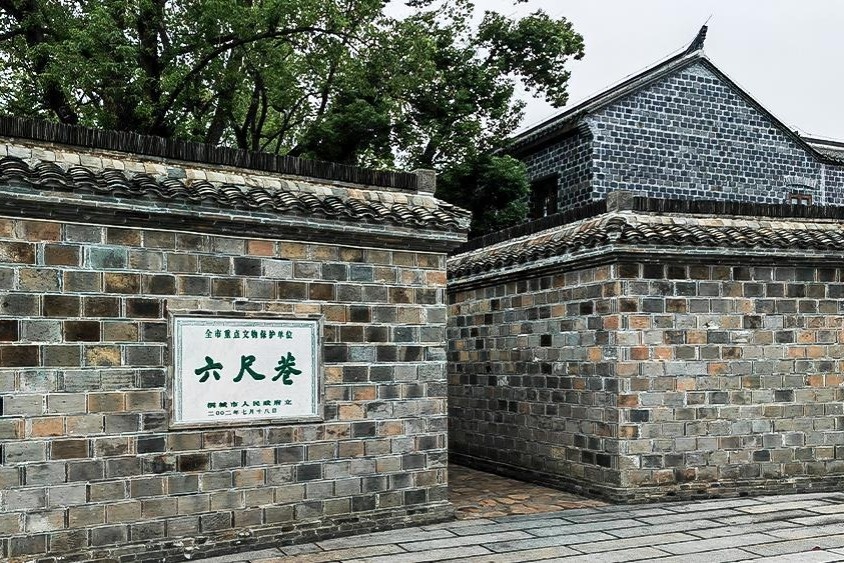
The Six-Foot Alley
What happens when two families fight over three feet of land—and a powerful official tells his own family to give it up? This HSK 5 reading tells the true story of the Six-Foot Alley, a small lane in China that became a giant lesson in humility, generosity, and the art of letting go.
翻译 Translation
清朝康熙年间,一户姓张的人家和一户姓吴的人家相邻。两家中间有三尺空地,由于他们的房子都是祖上留下的产业,时间久远,这三尺空地究竟属于哪家,谁也不清楚。
During the Kangxi reign of the Qing Dynasty, a Zhang family and a Wu family lived next to each other. Between the two families was a three-foot-wide empty space. Since both families’ houses were property left by their ancestors, and much time had passed, no one was clear about which family the three-foot space actually belonged to.
后来,吴家重修房子,想要占用那三尺空地,张家不同意,说这三尺空地是他们家的,吴家则认为是自己的,两家为此争执不下。于是,张家给在京城做大官的亲戚张英去了一封信,说明了情况,希望张英可以为张家做主。
Later, the Wu family was renovating their house and wanted to use that three-foot space. The Zhang family disagreed, saying the three-foot space belonged to them, while the Wu family thought it was theirs. The two families argued endlessly over it. So the Zhang family sent a letter to their relative Zhang Ying, a high official in the capital, explaining the situation and hoping Zhang Ying could back the Zhang family.

Unlock this content and all premium features with a membership. Get access to graded HSK lessons, reading materials, grammar breakdowns, online tests, and more!

Already a member? Sign in.
清朝
Qing Dynasty
noun
清朝是中国最后一个封建王朝。
The Qing Dynasty was China’s last feudal dynasty.
年间
during a certain period of years
noun
康熙年间,国家比较稳定。
During the Kangxi period, the country was relatively stable.
相邻
to be adjacent; neighboring
verb/adjective
我们两个村子相邻。
Our two villages are adjacent.
空地
empty space; open ground
noun
那片空地上种了很多树。
Many trees were planted on that empty space.
祖上
ancestors
noun
这座房子是祖上留下的。
This house was left by our ancestors.
产业
property; estate; industry
noun
他家有很多产业。
His family has a lot of property.
久远
distant; long ago
adjective
这个传说年代久远。
This legend is from a long time ago.
究竟
actually; exactly; after all
adverb
你到底究竟想说什么?
What exactly do you want to say?
属于
to belong to
verb
这本书属于我。
This book belongs to me.
重修
to rebuild; to renovate
verb
他们打算重修老房子。
They plan to renovate the old house.
占用
to occupy; to take up
verb
请不要占用公共空间。
Please do not occupy public space.
同意
to agree
verb
我同意你的看法。
I agree with your view.
争执不下
to argue endlessly without resolution
phrase
两家为这件事争执不下。
The two families argued endlessly over this matter.
京城
capital city
noun
他从小在京城长大。
He grew up in the capital.
大官
high official
noun
他的叔叔在朝廷做大官。
His uncle is a high official in the imperial court.
亲戚
relative
noun
过年时亲戚们会聚在一起。
During the New Year, relatives gather together.
说明
to explain; explanation
verb/noun
请说明你的理由。
Please explain your reason.
做主
to make a decision; to back someone
verb
这件事由你来做主。
You make the decision on this matter.
不料
unexpectedly
adverb
不料他拒绝了我们的邀请。
Unexpectedly, he refused our invitation.
压制
to suppress; to oppress
verb
不要压制孩子的想法。
Don’t suppress children’s ideas.
反而
instead; on the contrary
adverb
雨不但没停,反而更大了。
Not only did the rain not stop, it actually got heavier.
让出
to give up; to yield
verb phrase
他主动让出了自己的座位。
He voluntarily gave up his seat.
修书
to write a letter (formal)
verb phrase
古人修书常常用毛笔。
Ancient people often used brushes to write letters.
何妨
what harm is there; why not
adverb
让他三尺又何妨?
What harm is there in letting him have three feet?
犹在
still exists
verb phrase
万里长城今犹在。
The Great Wall of ten thousand miles still stands today.
当年
that year; in those years
noun
当年的老朋友现在都老了。
The old friends from those years are all old now.
惭愧
ashamed
adjective
他为自己说的话感到惭愧。
He felt ashamed of what he said.
主动
active; voluntarily
adjective/adverb
他主动帮助了同学。
He actively helped his classmate.
登门拜访
to visit someone at their home
phrase
他亲自登门拜访老师。
He personally visited the teacher at home.
大度
magnanimous; generous
adjective
他为人很大度。
He is very magnanimous.
谦让
to yield modestly; humility
verb/noun
谦让是一种美德。
Humility is a virtue.
感动
to move emotionally; moved
verb/adjective
他的故事让我很感动。
His story moved me very much.
巷子
alley; lane
noun
这条巷子很安静。
This alley is very quiet.
足有
fully; as much as
phrase
这条河足有十米深。
This river is fully ten meters deep.
人称
to be called by people
verb phrase
他人称“活雷锋”。
He is called a “living Lei Feng.”
处理
to handle; to deal with
verb
这件事需要妥善处理。
This matter needs to be handled properly.
邻里
neighborhood; neighbors
noun
邻里之间应该互相帮助。
Neighbors should help each other.
财产
property; assets
noun
他留下了一大笔财产。
He left behind a large amount of property.
纠纷
dispute; conflict
noun
他们之间有财产纠纷。
There is a property dispute between them.
传为佳话
to be passed down as a beautiful story
phrase
这件事被传为佳话。
This matter was passed down as a beautiful story.
思考
to think; reflection
verb/noun
我们需要认真思考这个问题。
We need to seriously think about this problem.
俗话
common saying; proverb
noun
俗话说的好:失败是成功之母。
As the saying goes: failure is the mother of success.
退一步
to take a step back
phrase
退一步海阔天空。
Take a step back and the sea and sky are vast.
天高海阔
the sky is high and the sea is wide; broad horizons
idiom
退一步天高海阔。
Take a step back, and the sky is high and the sea is wide.
心平气和
calm and peaceful; even-tempered
idiom
他心平气和地解释了原因。
He calmly explained the reason.
忍让
to be forbearing; forbearance
verb/noun
忍让是有限度的。
Forbearance has its limits.
暂时
temporarily; for the time being
adverb/adjective
他暂时住在朋友家。
He is temporarily staying at a friend’s house.
利益
benefit; interest
noun
我们不能只看眼前的利益。
We cannot only look at immediate benefits.
风度
grace; demeanor
noun
他很有绅士风度。
He has a very gentlemanly demeanor.
修养
cultivation; self-cultivation
noun
读书可以提高人的修养。
Reading can improve a person’s cultivation.
美德
virtue
noun
诚实是一种美德。
Honesty is a virtue.
至高境界
supreme realm; highest state
phrase
帮助别人是人生的至高境界。
Helping others is the supreme realm of life.
由于…… (yóuyú...)
“由于……” means “due to...” or “because of...”. It introduces a reason or cause, and is more formal than “因为”. It can be used at the beginning of a sentence or after the subject. The structure is “由于 + reason, result.”
由于他们的房子都是祖上留下的产业,时间久远,这三尺空地究竟属于哪家,谁也不清楚。
Since both families’ houses were property left by their ancestors, and much time had passed, no one was clear about which family the three-foot space actually belonged to.
由于天气原因,飞机晚点了两个小时。
Due to weather conditions, the flight was delayed by two hours.
由于他工作努力,很快就被提升了。
Because he worked hard, he was promoted quickly.
不但……反而…… (búdàn... fǎn'ér...)
“不但……反而……” means “not only did... but instead...”. It is used when the result is the opposite of what was expected. The structure is “不但 + unexpected action/result, 反而 + opposite result.” It is a key HSK 5 pattern for expressing contrast and surprise.
不料张英不但没压制吴家,反而让自己家人让出这三尺空地。
Unexpectedly, Zhang Ying not only did not suppress the Wu family, but instead told his own family to give up the three-foot space.
他不但没有生气,反而笑了起来。
He not only did not get angry, but instead started laughing.
吃了药以后,他的病不但没好,反而更严重了。
After taking the medicine, his illness not only did not improve, but instead got worse.
被……所…… (bèi... suǒ...)
“被……所……” is a formal passive structure meaning “to be ... by ...”. It is often used in written Chinese to express being moved, influenced, or affected by someone or something. The structure is “A + 被 + B + 所 + verb.” It adds a literary or formal tone.
吴家被张英的大度谦让所感动。
The Wu family was moved by Zhang Ying’s magnanimity and humility.
他的演讲被大家所喜爱。
His speech was loved by everyone.
这个想法被许多人所接受。
This idea was accepted by many people.
六尺巷
Subscribe
Login
0 Comments
Newest