
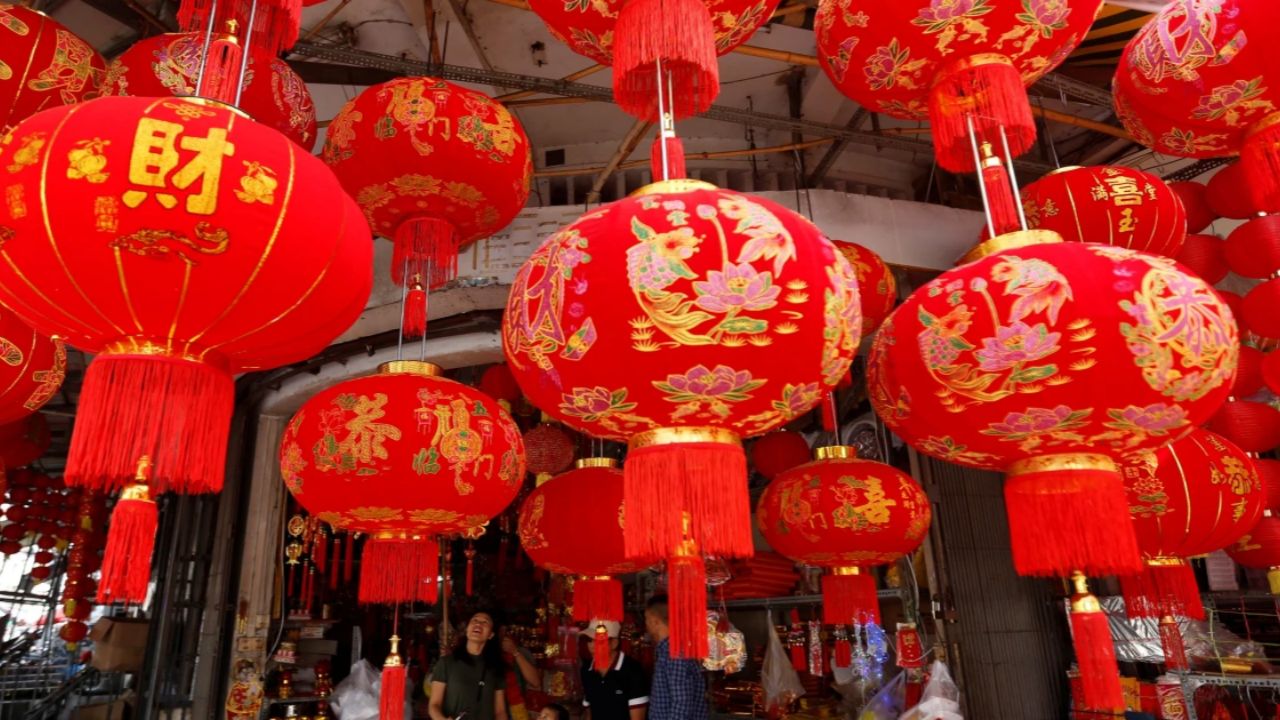
Chinese New Year: Traditions of Family and Celebration
What makes Chinese New Year so special? It's not just the food, the red envelopes, or the fireworks—it's the whole family being together. This HSK 4 reading takes you through cleaning, dumplings, New Year's Eve dinner, and the joy of a fresh start.
翻译 Translation
中国新年是中国人最重要的节日。每年农历一月一日,全家人都会团聚在一起庆祝新年。
Chinese New Year is the most important festival for Chinese people. Every year on the first day of the first lunar month, the whole family gathers together to celebrate the New Year.
过年前,中国人会打扫房子,买很多好吃的食物,会做鱼和饺子。鱼代表“年年有余”,饺子像元宝,希望新年有钱。
Before the New Year, Chinese people clean the house, buy lots of delicious food, and make fish and dumplings. Fish represents "abundance every year," and dumplings look like silver ingots, hoping for money in the New Year.

Unlock this content and all premium features with a membership. Get access to graded HSK lessons, reading materials, grammar breakdowns, online tests, and more!

Already a member? Sign in.
中国新年
Chinese New Year
noun
中国新年的时候,街上很热闹。
During Chinese New Year, the streets are very lively.
节日
festival; holiday
noun
春节是中国最重要的节日。
Spring Festival is China's most important festival.
农历
lunar calendar
noun
农历新年每年日期都不一样。
The date of the lunar New Year is different every year.
全家人
the whole family
noun phrase
全家人一起吃饭很开心。
The whole family eating together is very happy.
团聚
to reunite; to gather together
verb
过年的时候,家人都会团聚。
During the New Year, family members all gather together.
庆祝
to celebrate
verb
我们庆祝他的生日。
We celebrate his birthday.
过年
to celebrate the New Year
verb
过年的时候,大家都很高兴。
During the New Year, everyone is very happy.
打扫
to clean; to sweep
verb
周末我要打扫房间。
I will clean my room on the weekend.
房子
house; apartment
noun
他们的房子很大。
Their house is very big.
食物
food
noun
这里的食物很好吃。
The food here is very delicious.
鱼
fish
noun
我喜欢吃鱼。
I like eating fish.
饺子
dumpling
noun
过年的时候,我们吃饺子。
During the New Year, we eat dumplings.
代表
to represent; representative
verb/noun
红色代表喜庆。
Red represents joy.
年年有余
abundance every year
phrase
鱼代表“年年有余”。
Fish represents "abundance every year."
元宝
silver ingot
noun
饺子像元宝。
Dumplings look like silver ingots.
希望
to hope; hope
verb/noun
我希望你明天来。
I hope you come tomorrow.
有钱
rich; to have money
phrase
他希望新年有钱。
He hopes to have money in the New Year.
除夕
New Year's Eve
noun
除夕晚上,我们一起吃饭。
On New Year's Eve, we eat together.
年夜饭
New Year's Eve dinner; reunion dinner
noun
年夜饭很好吃。
The New Year's Eve dinner is very delicious.
桌子
table
noun
桌子上有很多菜。
There are many dishes on the table.
摆满
to be filled with; to spread all over
verb phrase
桌子上摆满了水果。
The table is filled with fruit.
红色
red
noun/adjective
红色是中国新年的颜色。
Red is the color of Chinese New Year.
虾
shrimp
noun
我喜欢吃虾。
I like eating shrimp.
金色
golden
noun/adjective
春卷是金色的。
Spring rolls are golden.
春卷
spring roll
noun
春卷很好吃。
Spring rolls are very delicious.
甜甜的
sweet
adjective phrase
年糕甜甜的。
Rice cakes are sweet.
年糕
rice cake
noun
过年时我们吃年糕。
During the New Year we eat rice cakes.
大年初一
first day of the New Year
noun
大年初一,大家去拜年。
On the first day of the New Year, everyone goes to pay New Year calls.
早上
morning
noun
早上我六点起床。
I get up at six in the morning.
小孩子
child
noun
小孩子喜欢放鞭炮。
Children like setting off firecrackers.
新衣服
new clothes
noun phrase
过年的时候,孩子穿新衣服。
During the New Year, children wear new clothes.
爷爷奶奶
grandparents
noun
我去爷爷奶奶家拜年。
I go to my grandparents' house to pay New Year calls.
拜年
to pay New Year calls
verb
大年初一,人们互相拜年。
On the first day of the New Year, people pay New Year calls to each other.
长辈
elder; senior
noun
见到长辈要问好。
When you see elders, you should say hello.
新年好
Happy New Year
phrase
见到长辈要说“新年好”。
When you see elders, you should say "Happy New Year."
晚辈
younger generation; junior
noun
长辈给晚辈红包。
Elders give red envelopes to the younger generation.
红包
red envelope
noun
过年时,孩子收到红包。
During the New Year, children receive red envelopes.
压岁钱
lucky money
noun
红包里装着压岁钱。
The red envelope contains lucky money.
祝福
blessing; to bless
noun/verb
这是新年的祝福。
This is a New Year blessing.
街上
on the street
noun phrase
街上很多人。
There are many people on the street.
放鞭炮
to set off firecrackers
verb phrase
过年时,人们放鞭炮。
During the New Year, people set off firecrackers.
鞭炮纸
firecracker paper
noun
地上有很多鞭炮纸。
There is a lot of firecracker paper on the ground.
铺满
to cover; to spread over
verb phrase
地上铺满了雪。
The ground is covered with snow.
地面
ground; floor
noun
地面很干净。
The ground is very clean.
开满
to bloom everywhere
verb phrase
春天,公园里开满了花。
In spring, the park is full of blooming flowers.
红花
red flower
noun
红花很漂亮。
Red flowers are very beautiful.
期待
to look forward to; expectation
verb/noun
我期待明天的旅行。
I look forward to tomorrow's trip.
下一个
next one
phrase
下一个新年快点到来。
May the next New Year come soon.
快点
hurry up; quickly
adverb phrase
快点走吧,我们要迟到了。
Hurry up, we're going to be late.
到来
to arrive; to come
verb
春天的到来让天气变暖了。
The arrival of spring made the weather warmer.
会 (huì)
"会" means "will" or "can." It is used to express a future possibility, a willingness, or a learned ability. In this text, it shows what people will do during Chinese New Year. The structure is "Subject + 会 + Verb Phrase."
每年农历一月一日,全家人都会团聚在一起庆祝新年。
Every year on the first day of the first lunar month, the whole family will gather together to celebrate the New Year.
过年前,中国人会打扫房子。
Before the New Year, Chinese people will clean the house.
小孩子会穿上新衣服。
Children will put on new clothes.
像 (xiàng)
"像" means "to look like" or "to be similar to." It is used to compare two things that resemble each other. The structure is "A + 像 + B." It is very common when describing appearances or making metaphors.
饺子像元宝。
Dumplings look like silver ingots.
红红的鞭炮纸铺满地面,就像开满了红花。
The red firecracker paper covers the ground, just like red flowers blooming everywhere.
她像她妈妈一样漂亮。
She is as beautiful as her mother.
每次……都…… (měi cì... dōu...)
"每次……都……" means "every time... always..." It is used to describe a repeated action or habit. The structure is "每次 + situation, 都 + result." It shows that something happens every time without exception.
每次过完年,他们都开始期待下一个新年快点到来。
Every time the New Year is over, they start looking forward to the next New Year coming soon.
每次我看到这张照片,都会想起我的家乡。
Every time I see this photo, I always think of my hometown.
每次下雨,他都带伞。
Every time it rains, he always brings an umbrella.
中国新年
Subscribe
Login
0 Comments
Newest