
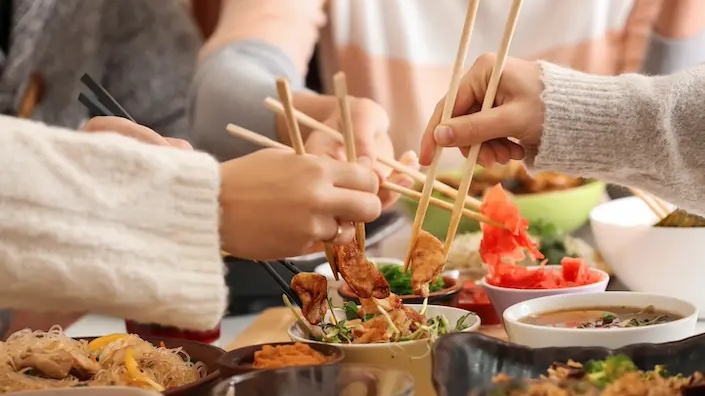
Chinese Table Manners: Rules for Eating Politely
Chopsticks can say a lot at a Chinese table. Put them in the wrong place, and it may feel unlucky. Use them the wrong way, and it may feel rude. This HSK 2 reading gives five easy rules for eating politely in China.
翻译 Translation
在中国,吃饭有一些规矩。比如,不要把筷子插在米饭中间。因为这像烧香,不吉利。
In China, there are some rules for eating. For example, don't stick chopsticks in the middle of the rice. Because this looks like burning incense, and it is unlucky.
也不要用筷子敲碗。以前,只有乞丐才敲碗要饭。所以,敲碗不是好习惯。
Also, don't use chopsticks to tap the bowl. In the past, only beggars tapped bowls to beg for food. So tapping the bowl is not a good habit.

Unlock this content and all premium features with a membership. Get access to graded HSK lessons, reading materials, grammar breakdowns, online tests, and more!

Already a member? Sign in.
中国
China
noun
中国很大。
China is very big.
吃饭
to eat; to have a meal
verb
我们一起去吃饭吧。
Let's go eat together.
规矩
rule; custom; manners
noun
每个地方都有自己的规矩。
Every place has its own rules.
比如
for example
preposition/conjunction
我喜欢水果,比如苹果。
I like fruit, for example apples.
筷子
chopsticks
noun
我会用筷子。
I can use chopsticks.
插
to stick in; to insert
verb
请把花插在水里。
Please put the flowers in water.
米饭
cooked rice
noun
我中午吃了米饭。
I ate rice at noon.
中间
middle; center
noun
他坐在我们中间。
He sits in the middle of us.
像
to be like; to resemble
verb/preposition
她像她妈妈。
She looks like her mother.
烧香
to burn incense
verb phrase
奶奶在庙里烧香。
Grandma burns incense in the temple.
不吉利
unlucky
adjective phrase
在中国,送钟不吉利。
In China, giving a clock as a gift is unlucky.
敲
to knock; to tap
verb
有人在敲门。
Someone is knocking on the door.
碗
bowl
noun
碗里有米饭。
There is rice in the bowl.
以前
before; in the past
noun
以前我住在北京。
I lived in Beijing in the past.
乞丐
beggar
noun
那个乞丐很冷。
That beggar is cold.
要饭
to beg for food
verb
以前他靠要饭生活。
In the past, he lived by begging for food.
习惯
habit; to be used to
noun/verb
我习惯早睡早起。
I am used to sleeping early and getting up early.
指
to point at
verb
不要用筷子指人。
Don't point at people with chopsticks.
别人
others; other people
pronoun
我们要帮助别人。
We should help others.
礼貌
polite; politeness
adjective/noun
对老师要有礼貌。
You should be polite to teachers.
如果
if
conjunction
如果明天下雨,我们就不去。
If it rains tomorrow, we won't go.
怎么
how
pronoun/adverb
这个字怎么读?
How do you read this character?
先
first; before
adverb
你先走,我马上来。
You go first; I'll come right away.
夹菜
to pick up food for someone
verb phrase
他给我夹菜。
He picked up food for me.
公筷
serving chopsticks
noun
请用公筷。
Please use serving chopsticks.
卫生
hygienic; hygiene
adjective/noun
饭前洗手很卫生。
Washing hands before eating is hygienic.
最后
finally; last
noun/adverb
最后,我说一句谢谢。
Finally, I say thank you.
吃光
to eat up; to finish eating
verb phrase
他把饭都吃光了。
He ate up all the rice.
留
to leave; to keep
verb
请给我留一个座位。
Please save a seat for me.
盘子
plate
noun
盘子里有水果。
There is fruit on the plate.
表示
to show; to express
verb
他笑了,表示很高兴。
He smiled, showing that he was very happy.
吃饱
to eat one's fill; to be full
verb phrase
我吃饱了。
I am full.
尊重
to respect
verb
我们要尊重老人。
We should respect old people.
主人
host; owner
noun
他是这家的主人。
He is the host of this house.
不要…… (bú yào...)
"不要……" means "Don't……" It is used to tell someone not to do something. The structure is "不要 + verb phrase." It is very common in everyday Chinese when giving advice, rules, or warnings.
不要把筷子插在米饭中间。
Don't stick chopsticks in the middle of the rice.
不要用筷子敲碗。
Don't use chopsticks to tap the bowl.
不要用筷子指别人。
Don't point at others with chopsticks.
最好…… (zuìhǎo...)
"最好……" means "had better……" or "it is best to……" It is used to give friendly advice or make a suggestion. The structure is "最好 + verb phrase." It sounds practical and polite.
最好用公筷。
It is best to use serving chopsticks.
你最好早点儿休息。
You'd better rest a little earlier.
我们最好先问问老师。
We'd better ask the teacher first.
如果……可以…… (rúguǒ... kěyǐ...)
"如果……" means "if……" and "可以……" means "can……" or "may……." The structure is "如果 + condition, 可以 + suggestion/result." It is used to talk about what someone can do in a certain situation.
如果你不知道怎么用筷子,可以先看别人怎么做。
If you don't know how to use chopsticks, you can first watch how others do it.
如果明天天气好,我们可以去公园。
If the weather is good tomorrow, we can go to the park.
如果你有问题,可以问我。
If you have questions, you can ask me.
中国人的餐桌礼仪
Subscribe
Login
0 Comments
Newest