
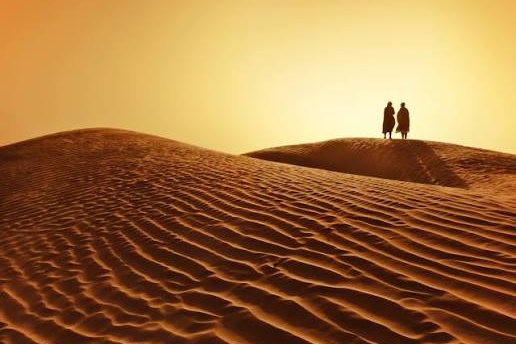
Two Friends in the Desert
When his best friend slaps him in the desert, one man writes it in the sand. When that same friend saves his life, he carves it in stone. This HSK 5 reading tells a moving story about forgiveness, gratitude, and why we should write our hurts where the wind can erase them.
翻译 Translation
一对好朋友在沙漠旅行中吵了一架,其中一人一气之下打了同伴一个耳光。被打的人愣了半天,最后却没有说话,只是在沙子上写下:今天我的好朋友打了我一个耳光。
A pair of good friends had a fight while traveling in the desert. In a moment of anger, one of them slapped his companion. The person who was slapped was stunned for a long time. In the end, he did not speak, but only wrote in the sand: Today my good friend slapped me.
经过长途跋涉,他们终于踏上了绿洲。看到清澈的河水,两人兴奋极了,摇摇晃晃地向河边走去。但由于天气炎热,再加上饥渴和劳累,他们的身体承受力已经到了极限,刚到河边,被打了一个耳光的那个人便一头栽进了河里。另一个人赶忙上前,费了好大力气才将他救起。
After a long journey, they finally set foot on an oasis. Seeing the clear river water, the two were extremely excited and walked unsteadily toward the river. But due to the hot weather, plus hunger, thirst, and exhaustion, their bodies had already reached their limit. As soon as they reached the river, the one who had been slapped fell headfirst into the water. The other one hurried forward and spent a great deal of effort to rescue him.

Unlock this content and all premium features with a membership. Get access to graded HSK lessons, reading materials, grammar breakdowns, online tests, and more!

Already a member? Sign in.
沙漠
desert
noun
骆驼能在沙漠里走很多天不喝水。
Camels can walk in the desert for many days without drinking water.
吵架
to quarrel; to argue
verb
他们因为一件小事吵架了,但很快就和好了。
They quarreled over a small matter but quickly made up.
同伴
companion; partner
noun
旅行的时候,有一个好同伴非常重要。
When traveling, having a good companion is very important.
耳光
slap on the face
noun
他生气地打了对方一个耳光。
He angrily slapped the other person.
愣
to be stunned; to be dazed
verb/adjective
听到这个消息,他愣了半天才反应过来。
Hearing this news, he was stunned for a long time before reacting.
沙子
sand
noun
孩子们在沙滩上玩沙子。
The children are playing with sand on the beach.
长途跋涉
long and arduous journey
idiom
经过长途跋涉,他们终于到达了目的地。
After a long and arduous journey, they finally reached their destination.
绿洲
oasis
noun
在沙漠中,绿洲是旅行者休息的地方。
In the desert, an oasis is a place for travelers to rest.
清澈
clear; limpid
adjective
山里的湖水非常清澈,可以看到水底的石头。
The lake water in the mountains is very clear; you can see the stones at the bottom.
兴奋
excited
adjective
孩子们听到明天要去动物园,都非常兴奋。
The children were all very excited when they heard they were going to the zoo tomorrow.
摇摇晃晃
unsteady; staggering
adjective
他累得摇摇晃晃,差点儿摔倒。
He was so tired that he staggered and almost fell.
炎热
hot; scorching
adjective
夏天的中午非常炎热,人们都躲在家里。
At noon in summer it is extremely hot, and people all hide at home.
饥渴
hungry and thirsty; hunger and thirst
adjective/noun
走了大半天的路,大家又饥又渴。
After walking for most of the day, everyone was both hungry and thirsty.
劳累
exhausted; fatigue
adjective/noun
连续工作了十二个小时,他感到非常劳累。
After working twelve hours straight, he felt extremely exhausted.
承受力
capacity to bear; tolerance
noun
每个人的心理承受力都不一样。
Everyone’s psychological tolerance is different.
极限
limit; maximum
noun
运动员们不断挑战自己的极限。
Athletes constantly challenge their own limits.
一头栽进
to fall headfirst into
phrase
他太累了,一头栽进床上就睡着了。
He was so tired that he fell headfirst onto the bed and fell asleep.
赶忙
hurriedly; hastily
adverb
听到有人敲门,他赶忙去开门。
Hearing someone knock, he hurried to open the door.
救
to save; to rescue
verb
消防员从大火中救出了三个人。
Firefighters rescued three people from the big fire.
刻
to carve; to engrave
verb
他在木头上刻了自己的名字。
He carved his name on the wood.
石头
stone; rock
noun
河边的石头被水冲得很光滑。
The stones by the river have been smoothed by the water.
一命
one’s life
noun
医生救了他一命。
The doctor saved his life.
明白
to understand; clear
verb/adjective
听完老师的解释,他终于明白了这道题。
After hearing the teacher’s explanation, he finally understood this problem.
伤害
to hurt; harm
verb/noun
语言有时也会伤害别人。
Words can sometimes hurt others.
吹平
to blow smooth; to level by wind
verb
风很快把沙滩上的脚印吹平了。
The wind quickly smoothed away the footprints on the beach.
帮助
to help; help
verb/noun
谢谢你的帮助,我才能完成这个任务。
Thanks to your help, I was able to complete this task.
经得起
to be able to withstand
verb
真正的友谊经得起时间的考验。
True friendship can withstand the test of time.
考验
test; trial; to test
noun/verb
这次考试是对我们学习成果的考验。
This exam is a test of our learning results.
陷入
to fall into; to be caught in
verb
他陷入了深深的思考中。
He fell into deep thought.
怪圈
vicious circle; strange cycle
noun
他总是陷入同样的怪圈,犯了错又犯错。
He always falls into the same vicious circle, making one mistake after another.
付出
to pay; to devote; effort
verb/noun
只有付出努力,才会有收获。
Only by putting in effort will you gain something.
给予
to give; to grant
verb
父母给予了孩子无私的爱。
Parents give their children selfless love.
视为
to regard as; to treat as
verb
他把这本书视为自己最珍贵的礼物。
He regards this book as his most precious gift.
理所当然
to take for granted; as a matter of course
idiom
我们不能把父母的付出视为理所当然。
We cannot take our parents’ efforts for granted.
感激
to be grateful; gratitude
verb/noun
我非常感激你在我困难时给我的帮助。
I am very grateful for your help when I was in difficulty.
不可原谅
unforgivable
phrase
欺骗朋友是不可原谅的行为。
Deceiving a friend is unforgivable behavior.
苛责
to blame harshly; harsh criticism
verb/noun
对别人不要太苛责,要多一些理解。
Don’t be too harsh on others; have more understanding.
难免
unavoidable; hard to avoid
adverb
朋友之间难免会有一些小矛盾。
Between friends, small conflicts are unavoidable.
产生
to produce; to generate; to arise
verb
这个想法是在他旅行时产生的。
This idea arose during his travels.
矛盾
conflict; contradiction; contradictory
noun/adjective
他们因为一件小事产生了矛盾。
They had a conflict because of a small matter.
误会
misunderstanding; to misunderstand
noun/verb
那只是一个误会,你不要放在心上。
That was just a misunderstanding; don’t take it to heart.
无心
unintentional
adjective
他说那句话是无心的,你别生气。
He said that unintentionally; don’t be angry.
彼此
each other; one another
pronoun
朋友之间应该彼此信任。
Friends should trust each other.
遗憾
regret; regrettable
noun/adjective
没能参加你的婚礼,我感到很遗憾。
I feel very regretful that I could not attend your wedding.
悲哀
sorrow; sad
noun/adjective
失去一个好朋友是一件令人悲哀的事。
Losing a good friend is a sad thing.
忘记
to forget
verb
我忘记带钥匙了,只好等家人回来。
I forgot to bring my keys, so I had to wait for my family to return.
铭记
to remember firmly; to engrave in memory
verb
我会永远铭记你对我的帮助。
I will always remember your help.
关爱
care and love; to care for
noun/verb
我们应该多给老人一些关爱。
We should give more care to the elderly.
珍惜
to cherish; to treasure
verb
我们要珍惜身边的每一个人。
We should cherish every person around us.
身边
side; around oneself
noun
请照顾好身边的人。
Please take good care of the people around you.
一气之下 (yí qì zhī xià)
“一气之下” means “in a moment of anger” or “in a fit of rage.” It introduces an action that someone does impulsively because they are angry. The structure is “一气之下 + action.” It often appears at the beginning of a sentence to explain why someone did something.
其中一人一气之下打了同伴一个耳光。
In a moment of anger, one of them slapped his companion.
他一气之下辞掉了工作。
In a fit of rage, he quit his job.
她一气之下把手机摔在了地上。
In a fit of anger, she threw her phone on the ground.
不仅是……而且是…… (bùjǐn shì... érqiě shì...)
“不仅是……而且是……” means “not only is it... but it is also...” It is used to add emphasis by introducing a second, often stronger, point. The structure is “不仅是 + A + 而且是 + B.” It is common in HSK 5 writing and formal speech.
那将不仅是遗憾,而且是悲哀。
That would be not only a regret, but also a sorrow.
学习汉语不仅是掌握一门语言,而且是了解一种文化。
Learning Chinese is not only mastering a language, but also understanding a culture.
他不仅是我的同事,而且是我的好朋友。
He is not only my colleague, but also my good friend.
沙漠中的两个朋友
Subscribe
Login
0 Comments
Newest