
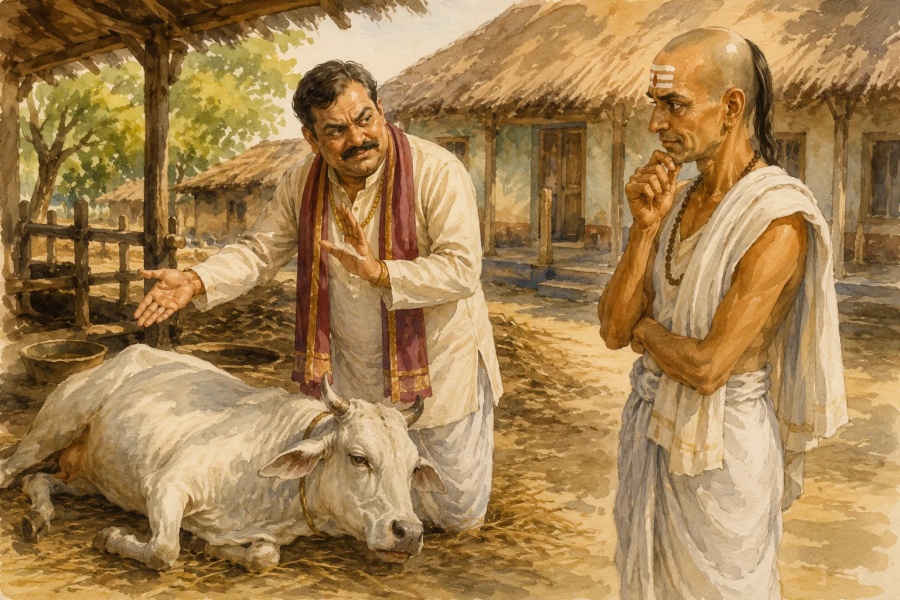
The Poor Man and the Cow
What would you do if someone gave you a cow to help you escape poverty? One poor man sells it for sheep, then chickens, then wine—and loses everything. This HSK 5 fable shows why patience and planning matter more than quick fixes.
翻译 Translation
有个人很穷,一个富人想帮他致富,便送给他一头牛,嘱咐他好好开荒,等到春天就给他送种子,这样到了秋天就能脱离贫穷。
There was a very poor man. A rich man wanted to help him become rich, so he gave him a cow and told him to work hard to open up wasteland. When spring came, he would send him seeds, and in this way, by autumn, he could escape poverty.
穷人满怀希望地开始奋斗。可没过几天,牛要吃草,人要吃饭,日子反而比过去还艰难。于是他想,不如把牛卖了买几只羊,先吃一只,剩下的留着生小羊,长大了可以卖更多的钱。
The poor man began to struggle with hope. But before many days passed, the cow needed to eat grass, and the man needed to eat food, so life became even harder than before. So he thought: I might as well sell the cow and buy a few sheep. I’ll eat one first, and keep the rest to give birth to lambs. When they grow up, I can sell them for more money.

Unlock this content and all premium features with a membership. Get access to graded HSK lessons, reading materials, grammar breakdowns, online tests, and more!

Already a member? Sign in.
穷人
poor person
noun
那个穷人虽然生活困难,但是一直很努力。
Although that poor man’s life is difficult, he has always worked hard.
富人
rich person
noun
那位富人经常帮助有困难的人。
That rich person often helps people in difficulty.
致富
to become rich
verb
很多人希望通过努力工作致富。
Many people hope to become rich through hard work.
牛
cow; ox
noun
农民牵着牛去田里干活。
The farmer leads the cow to the field to work.
嘱咐
to tell; to instruct; to enjoin
verb
妈妈嘱咐我出门要多穿衣服。
Mom told me to wear more clothes when going out.
开荒
to open up wasteland
verb
他们一家人花了很长时间开荒种地。
Their family spent a long time opening up wasteland to plant crops.
种子
seed
noun
春天是播种种子的好时候。
Spring is a good time to sow seeds.
秋天
autumn; fall
noun
秋天的天气很凉快,适合出去旅行。
Autumn weather is cool and suitable for traveling.
脱离
to escape from; to break away from
verb
经过多年努力,他终于脱离了贫困。
After years of hard work, he finally escaped poverty.
贫穷
poverty; poor
noun/adjective
贫穷并不可怕,可怕的是失去希望。
Poverty is not scary; what is scary is losing hope.
满怀希望
full of hope
phrase
大学毕业后,他满怀希望地去找工作。
After graduating from university, he looked for a job full of hope.
奋斗
to strive; to struggle
verb/noun
为了更好的生活,他一直在努力奋斗。
In order to have a better life, he has always been striving hard.
吃草
to eat grass
verb phrase
羊在山坡上安静地吃草。
The sheep eat grass quietly on the hillside.
日子
life; days
noun
他们一家的日子越过越好。
Their family’s life is getting better and better.
艰难
difficult; hard
adjective
创业的过程非常艰难,但他没有放弃。
The process of starting a business is very difficult, but he did not give up.
不如
not as good as; might as well
verb/adverb
既然这么累,不如先休息一会儿。
Since you are so tired, you might as well rest for a while first.
卖
to sell
verb
他打算把旧手机卖了,再买一个新的。
He plans to sell his old phone and buy a new one.
羊
sheep; goat
noun
草原上有很多羊在吃草。
There are many sheep eating grass on the grassland.
剩下
to remain; to be left
verb
饭剩下很多,我们明天可以接着吃。
A lot of food is left; we can continue eating it tomorrow.
生
to give birth; to be born
verb
邻居家的猫生了两只小猫。
The neighbor’s cat gave birth to two kittens.
小羊
lamb
noun
小羊跟着母羊在草地上跑。
The lamb follows the mother sheep running on the grass.
长大
to grow up
verb
他希望孩子长大后能成为有用的人。
He hopes his child will grow up to be a useful person.
实施
to carry out; to implement
verb
新的计划将从下个月开始实施。
The new plan will be implemented starting next month.
计划
plan; to plan
noun/verb
我们需要制定一个详细的计划。
We need to make a detailed plan.
忍不住
cannot help but; unable to hold back
verb phrase
听到这个笑话,他忍不住笑了起来。
Hearing this joke, he could not help laughing.
办法
method; way
noun
遇到问题不要着急,总能想到办法。
Don’t worry when you encounter problems; you can always think of a way.
倒不如
might as well; would be better to
phrase
天气这么热,倒不如待在家里。
The weather is so hot; we might as well stay at home.
鸡
chicken
noun
奶奶养了几只鸡,每天都能吃到新鲜鸡蛋。
Grandma keeps a few chickens, so we can eat fresh eggs every day.
鸡蛋
egg
noun
我每天早上吃一个鸡蛋。
I eat an egg every morning.
速度
speed
noun
他跑步的速度越来越快。
His running speed is getting faster and faster.
立刻
immediately; at once
adverb
接到电话后,他立刻赶到了医院。
After receiving the call, he immediately rushed to the hospital.
好转
to improve; to take a turn for the better
verb
吃了药以后,他的病情开始好转。
After taking medicine, his condition began to improve.
改善
to improve; to better
verb
政府正在努力改善人们的生活条件。
The government is working hard to improve people’s living conditions.
彻底
thorough; completely
adjective/adverb
房间需要彻底打扫一下。
The room needs a thorough cleaning.
破灭
to shatter; to be dashed
verb
他的希望因为一次失败而破灭了。
His hope was shattered because of one failure.
反正
anyway; in any case
adverb
反正今天没事,我们去看电影吧。
Anyway, we have nothing to do today; let’s go see a movie.
无望
hopeless
adjective
在那种情况下,他感到非常无望。
Under those circumstances, he felt very hopeless.
干脆
simply; just; straightforward
adverb/adjective
既然来不及了,干脆明天再去吧。
Since there is not enough time, let’s simply go tomorrow.
打壶酒
to buy a pot of wine
verb phrase
他下班后去小店打壶酒,准备和朋友一起喝。
After work, he went to the small shop to buy a pot of wine, preparing to drink with friends.
一醉解千愁
to drown one’s sorrows in wine
idiom
遇到困难时,一醉解千愁并不是好办法。
When facing difficulties, drowning your sorrows in wine is not a good solution.
如约
as promised; as agreed
adverb
他如约来到了见面地点。
He came to the meeting place as promised.
前来
to come; to arrive
verb
许多客人前来参加他的生日聚会。
Many guests came to attend his birthday party.
醉卧
to lie drunk
verb
他喝多了,醉卧在沙发上。
He drank too much and lay drunk on the sofa.
田地
field; farmland
noun
春天的田地一片绿色,非常美丽。
The fields in spring are all green and very beautiful.
荒凉
desolate; barren
adjective
那片荒凉的土地上几乎没有人住。
Almost no one lives on that desolate land.
叹气
to sigh
verb
听到这个消息,他无奈地叹气了。
Hearing this news, he sighed helplessly.
转身
to turn around
verb
她转身离开了房间,没有再说一句话。
She turned around and left the room without saying another word.
继续
to continue
verb
虽然很累,他还是继续工作了两个小时。
Although he was tired, he continued working for two more hours.
一贫如洗
utterly poor; penniless
idiom
他曾经一贫如洗,但后来通过努力改变了生活。
He was once utterly poor, but later changed his life through hard work.
生活
life; to live
noun/verb
我们都希望过上幸福的生活。
We all hope to live a happy life.
不如…… (bùrú...)
“不如……” means “not as good as” or “might as well.” It is used to compare two options and suggest that one is better than the other. The structure is “A + 不如 + B” or “不如 + verb phrase.”
不如把牛卖了买几只羊。
Might as well sell the cow and buy a few sheep.
既然这么累,不如先休息一会儿。
Since you are so tired, you might as well rest for a while first.
坐地铁不如骑自行车方便。
Taking the subway is not as convenient as riding a bicycle.
一……就…… (yī... jiù...)
“一……就……” means “as soon as... then...” It shows that one action immediately follows another. The structure is “一 + verb/condition + 就 + result.”
日子一艰难,他就忍不住吃鸡。
As soon as life became hard, he could not help eating a chicken.
我一回家就给你打电话。
I will call you as soon as I get home.
他一紧张就说不出话来。
As soon as he gets nervous, he cannot speak.
反正…… (fǎnzhèng...)
“反正……” means “anyway” or “in any case.” It is used to indicate that no matter what happens, the conclusion or action remains the same. It often appears before a statement that explains a decision.
反正致富也无望了,干脆把鸡卖了。
Anyway, there is no hope of getting rich now, so I might as well sell the chicken.
反正今天没事,我们去看电影吧。
Anyway, we have nothing to do today; let’s go see a movie.
不管你去不去,反正我要去。
Whether you go or not, I am going anyway.
穷人与牛
Subscribe
Login
0 Comments
Newest