
Chopsticks
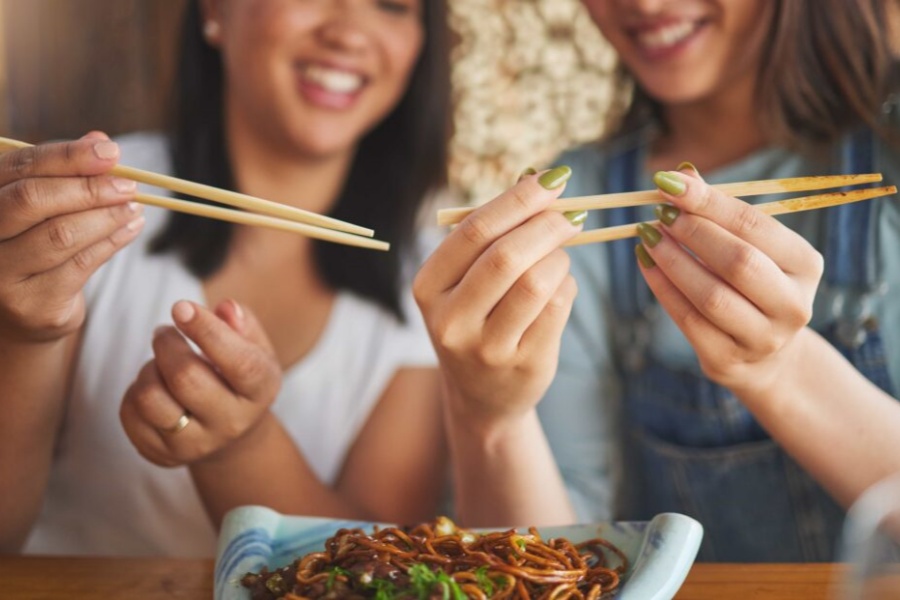
Can you eat rice with two sticks? For many people, this is not easy! But for Chinese people, chopsticks are as natural as breathing. This HSK 1 reading tells a small story about a boy, his American friend, and a funny lunch with chopsticks.
翻译 Translation
小明是一个中国男孩。他有一个好朋友,叫杰克。杰克是美国人。今天,杰克来小明家吃饭。
Xiao Ming is a Chinese boy. He has a good friend named Jack. Jack is American. Today, Jack comes to Xiao Ming’s home to eat.
小明的妈妈做了很多好吃的菜。桌子上有鱼、有肉,还有很多米饭。可是,桌子上没有刀,也没有叉子。只有两双筷子。
Xiao Ming’s mother made many delicious dishes. On the table there is fish, meat, and also a lot of rice. But on the table there is no knife, and no fork either. There are only two pairs of chopsticks.

Unlock this content and all premium features with a membership. Get access to graded HSK lessons, reading materials, grammar breakdowns, online tests, and more!

Already a member? Sign in.
筷子
chopsticks
noun
我会用筷子吃饭。
I can use chopsticks to eat.
男孩
boy
noun
那个男孩是我的弟弟。
That boy is my younger brother.
吃饭
to eat; to have a meal
verb
我们一起去吃饭吧。
Let’s go eat together.
妈妈
mom; mother
noun
我妈妈做的菜很好吃。
The food my mom makes is very delicious.
桌子
table
noun
桌子上有一本书。
There is a book on the table.
刀
knife
noun
请给我一把刀。
Please give me a knife.
叉子
fork
noun
吃西餐的时候用叉子。
When eating Western food, you use a fork.
双
pair
measure word
一双筷子。
A pair of chopsticks.
手
hand
noun
请洗一洗手。
Please wash your hands.
好像
seem; to be like
adverb/verb
他好像不太高兴。
He seems not very happy.
听
to listen; to obey
verb
请听我说。
Please listen to me.
口
mouthful; bite
measure word
他吃了一口饭。
He took a bite of rice.
米粒
grain of rice
noun
桌子上有几粒米粒。
There are a few grains of rice on the table.
掉
to fall; to drop
verb
我的书掉在地上了。
My book fell on the ground.
着急
anxious; to worry
adjective/verb
别着急,还有时间。
Don’t worry, there is still time.
教
to teach
verb
王老师教我们汉语。
Teacher Wang teaches us Chinese.
动
to move
verb
请你不要动。
Please don’t move.
夹
to pinch; to pick up (with chopsticks)
verb
他夹了一块肉。
He picked up a piece of meat.
终于
finally; at last
adverb
我终于到了。
I finally arrived.
历史
history
noun
中国有很长的历史。
China has a long history.
好像 (hǎoxiàng)
“好像” means “seem” or “to be like.” It is used when something looks or feels a certain way, but you are not 100% sure. The structure is “Subject + 好像 + adjective/verb.”
筷子在他的手里,好像两根不听话的小棍子。
In his hand, the chopsticks seem like two disobedient little sticks.
他好像不太高兴。
He seems not very happy.
今天好像要下雨。
It seems like it’s going to rain today.
别…… (bié...)
“别” means “don’t.” It is used to tell someone not to do something. The structure is “别 + verb.” It is very common in spoken Chinese.
别着急,我教你。
Don’t worry, I’ll teach you.
别忘了带书。
Don’t forget to bring your book.
别说话,老师在讲课。
Don’t talk; the teacher is teaching.
像……这样 (xiàng... zhèyàng)
“像……这样” means “like this” or “in this way.” It is used to show how to do something. The structure is “像 + example + 这样 + verb.”
像这样,轻轻地夹。
Like this, gently pinch.
像他这样跑步,很累。
Running like him is very tiring.
请你像这样写。
Please write like this.
筷子
Subscribe
Login
0 Comments
Newest